
Discover Fully Resourced KS2 Primary Music Units That Inspire Every Lesson

Updated: Aug 31
Music teaching works best when the lesson starts with sound, movement, attention and curiosity, not with a last-minute hunt for a backing track or a rushed plan. That is the promise behind the new KS2/Primary fully-resourced music units from Musical Contexts: clear, classroom-ready support that helps every music lesson feel purposeful, creative and enjoyable.
Primary music has a lot to do. It needs to build singing, listening, performing, composing, improvising, vocabulary, confidence and cultural understanding. It also needs to fit into a real school week, where time is tight and staff have different levels of music experience.
A strong unit makes that possible. It gives the lesson a shape, gives the teacher confidence, and gives pupils a musical journey they can feel from week to week.
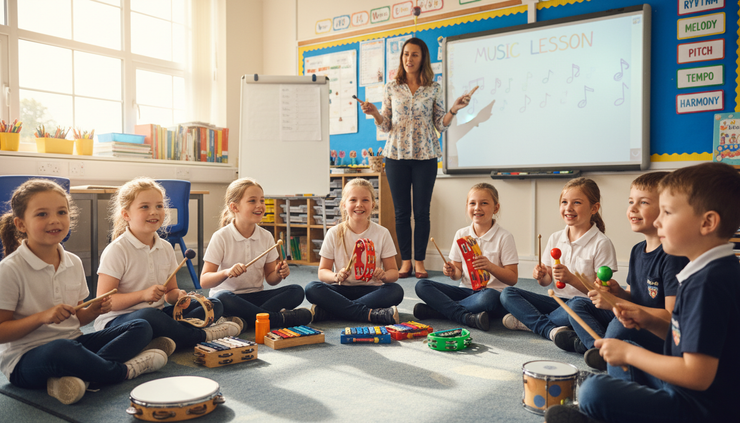
A music unit should do more than fill a timetable slot
A packed curriculum can make music feel fragile. If the plan is too vague, the lesson can drift. If the resources are scattered, preparation takes longer than the teaching. If the musical goal is unclear, pupils may have fun but miss the progression.
The new KS2/Primary units are designed to solve a familiar problem: how to deliver music that is creative, structured and manageable.
A good unit gives each lesson a clear purpose. Pupils know what they are listening for, what they are practising, and how their work connects to the bigger musical idea. Teachers can see the pathway too, so the sequence builds rather than resets each week.
That matters because music learning is cumulative. A rhythm pattern practised in one lesson can become part of a group composition later. A song learned by ear can lead into discussions about texture, structure or style. A listening activity can shape the way pupils perform.
When the teaching materials are ready, the lesson has room to breathe.
What fully resourced means in a real KS2 classroom
The phrase “fully resourced” matters. In primary music, it should mean more than a list of activities. It should help with the decisions teachers make before, during and after the lesson.
A well-resourced unit can support:
Lesson flow
Clear stages so the session moves from warm-up to learning, practice, creating and reflection.
Musical vocabulary
Key words that pupils can hear, use and apply in context.
Listening work
Guided prompts that help pupils notice instruments, structure, dynamics, tempo, pitch, rhythm and mood.
Performing opportunities
Practical tasks that let pupils sing, play, rehearse and improve.
Composing and improvising
Activities that give pupils musical choices without leaving them lost.
Assessment moments
Simple ways to notice progress while pupils are making music.
Differentiation
Options that let pupils take part at the right level, including those who need more support or more challenge.
Teacher confidence
Guidance that makes the subject feel teachable, even for staff who do not see themselves as music specialists.
That is the real value of Fully Resourced KS2 Primary Music Units. They reduce the planning burden while keeping the musical standard high.
The result is not a script that flattens the lesson. It is a strong foundation that lets teachers focus on pupils, sound and response.
Musical contexts make learning stick
Musical Contexts is a fitting name because context changes how pupils understand music. A rhythm exercise becomes more meaningful when pupils hear how rhythm works in a style, tradition or performance setting. A melody task becomes richer when pupils connect it to expression, lyrics, movement or instruments.
Context helps pupils answer the questions that sit behind good music learning:
What is this music doing?
Who might perform it?
How does it create its effect?
What choices did the musicians make?
How can we use a similar idea in our own work?
KS2 pupils are ready for this. They can compare sounds, explain preferences, spot patterns and make creative decisions. They can move beyond “I like it” towards “I noticed the repeated rhythm” or “the texture got thicker when more parts joined in”.
That shift is powerful. It turns listening into musicianship.
Fully resourced units can support this by placing skills inside a musical frame. Instead of teaching rhythm, melody, structure and notation as separate fragments, each unit can help pupils use those skills for a purpose.

Clear progression supports every year group in KS2
KS2 music should feel like a journey. Pupils should not meet the same basic task every year with a new worksheet. They should build confidence, widen their listening, and become more independent as performers and creators.
In lower KS2, pupils often need space to secure the essentials:
Keeping a steady pulse
Copying and creating simple rhythms
Singing with increasing control
Listening for obvious musical contrasts
Playing simple patterns together
Beginning to describe what they hear
By upper KS2, pupils can take on more responsibility:
Performing in parts
Refining ensemble work
Using structure in compositions
Explaining musical choices
Comparing styles and traditions
Notating ideas in age-appropriate ways
Evaluating and improving their work
A strong unit sequence makes these steps feel natural. It introduces musical ideas at the right level, revisits them often enough to build confidence, and gives pupils practical tasks that show progress.
This is especially helpful for subject leaders. A collection of well-planned units can make curriculum oversight clearer. It becomes easier to see which skills are being taught, where pupils revisit key concepts, and how the school’s music provision fits together across the year.
Support for non-specialists without holding back specialists
One of the biggest challenges in primary music is staff confidence. Some teachers are experienced musicians. Others are brilliant classroom teachers but feel less secure with singing, notation, instruments or musical terminology.
Fully resourced units can bridge that gap.
For non-specialists, they offer structure and reassurance. The teacher does not need to build every activity from scratch. They can follow a clear route, use prepared materials, and learn alongside the class where needed.
For music specialists, the same resources can save time without limiting creativity. A specialist can adapt, extend, add live demonstration, bring in extra repertoire, or develop the ensemble work further. The unit provides the spine, while the teacher adds their own musical expertise.
That flexibility is important. A useful resource should not assume every school has the same instruments, timetable or staff background. It should make music more accessible while still leaving room for musical ambition.
The best classroom music lessons often look simple from the outside. Pupils listen, copy, practise, perform, improve and reflect. Behind that simplicity sits careful planning. Ready-to-teach units do that planning work in advance, so the teacher can concentrate on the learning in the room.
What a fully resourced lesson can feel like
Picture a Year 4 or Year 5 lesson beginning with a short listening task. Pupils hear a piece and focus on one clear question: what changes when the texture gets thicker?
They listen once for first impressions. Then they listen again with a purpose. Hands go up. Someone identifies a new instrument. Another pupil notices that the rhythm keeps repeating. A third says the music feels more exciting because more layers join in.
The class moves into a practical warm-up. They clap a repeated rhythm, then transfer it to untuned percussion. The teacher introduces a second layer. Half the class keeps the pulse, while the other half plays the pattern.
Next, pupils work in groups. Their task is to create a short layered piece using the same idea. They choose instruments, agree an order, practise their entries and decide how to end.
The lesson closes with two groups performing. The class gives feedback using vocabulary from the start of the lesson. They talk about pulse, rhythm, texture and structure because those words have been used through sound, not just written on a board.
That is the kind of lesson a good unit makes easier to deliver. It has energy, but it also has direction.

Why schools benefit from ready-to-teach music units
Fully resourced music units are not only useful for individual lessons. They can support whole-school consistency.
For classroom teachers
For pupils
For subject leaders
For school leaders
Less time spent searching for materials and more confidence in delivery.
A clearer sense of progress, with regular chances to listen, perform and create.
Easier curriculum mapping and stronger evidence of musical learning.
More dependable music provision across classes and year groups.
This matters because music can be uneven across a school. One class may get rich practical lessons because the teacher loves music. Another may get less because the teacher feels unsure or because planning time disappears.
A shared set of units can help reduce that gap. It gives every class access to a planned sequence, not only the classes taught by the most confident musician.
It also supports inclusion. When resources are clear and lessons are practical, more pupils can participate. Music becomes something pupils do together, with roles for singers, players, listeners, creators and evaluators.
Music lessons pupils remember
The strongest primary music lessons stay with pupils because they involve the whole person. Pupils hear sound, feel pulse, use their voices, coordinate movement, listen to others and make creative choices.
A worksheet can support learning, but it cannot replace the moment when a class sings in tune together for the first time, when a group performance locks into a steady pulse, or when a pupil realises their small musical idea can become part of a larger piece.
Fully resourced units protect time for those moments. They make it easier to get instruments out because the task is ready. They make it easier to teach vocabulary because the words connect to the activity. They make it easier to assess because the musical outcome is clear.
That is especially valuable in KS2, where pupils are old enough to handle challenge but still benefit from playful, active learning. They can experiment, revise, perform and explain. With the right structure, they can also surprise themselves.

A practical next step for richer primary music
The new KS2/Primary fully-resourced music units from Musical Contexts are built for the reality of primary teaching. They support planning, confidence and consistency, while keeping the focus where it should be: on pupils making, hearing and understanding music.
For schools looking to strengthen their music curriculum, they offer a practical way forward. For teachers, they offer a clearer route into each lesson. For pupils, they offer more chances to participate, create, perform and grow as young musicians.
Music does not need to feel like the hardest subject to prepare. With the right resources in place, it can become one of the most memorable parts of the school week.


